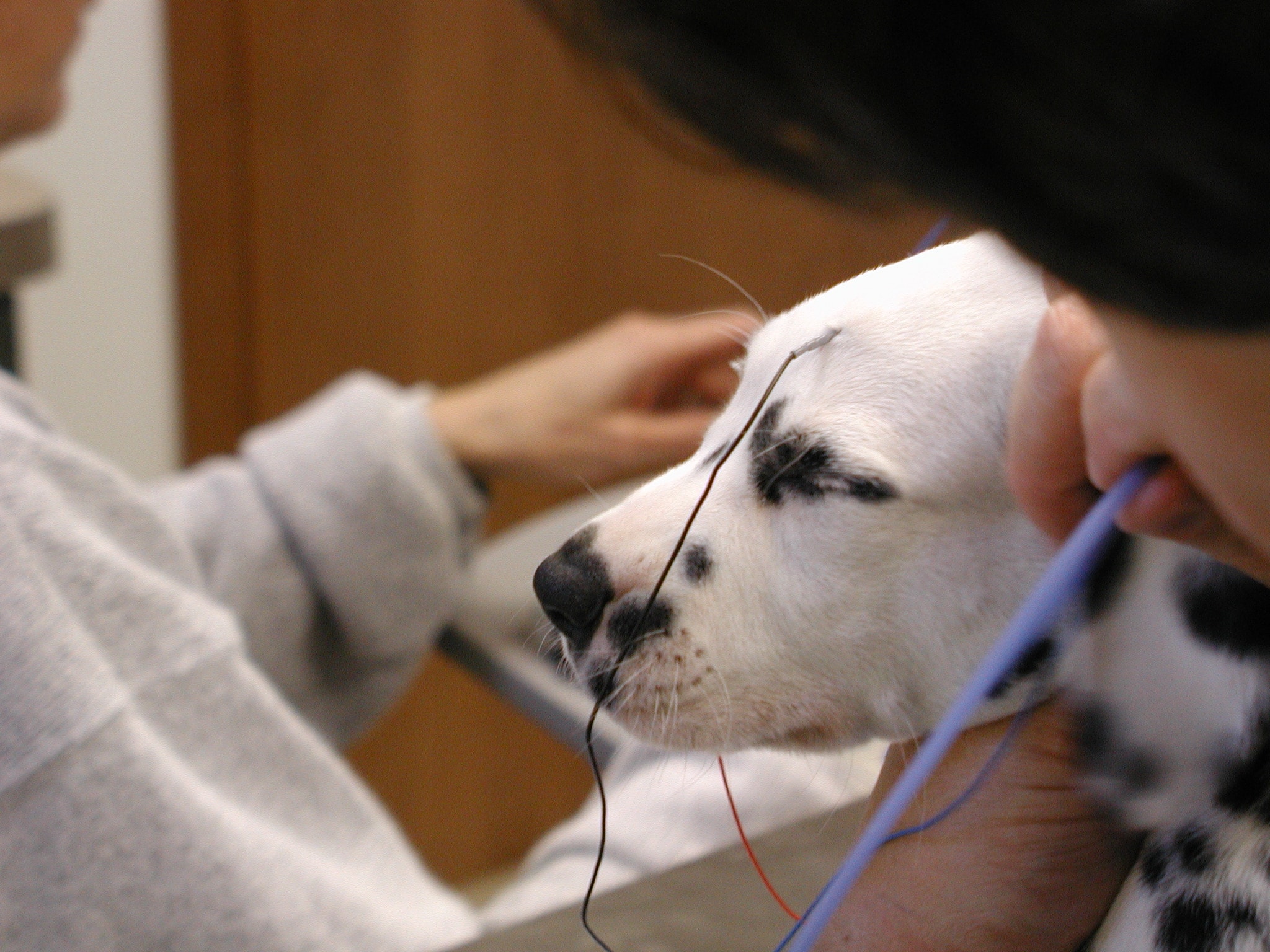
What We Test For, and Why — Part 3: The Rest of the Panel, and How to Verify Any of It
Hips, eyes, thyroid, skin, and the questions that should end a conversation with a breeder. Health testing shifts odds — it does not deliver guarantees. Here is what to ask, what to look up yourself, and what the honest close looks like.

What We Test For, and Why — Part 3: The Rest of the Panel, and How to Verify Any of It
Part 1 covered deafness, the piebald gene, and BAER testing. Part 2 covered uric acid, urate stones, and the LUA question.
The rest of the panel
Deafness and uric acid dominate the conversation, and rightly, but they are not the whole picture. A serious program screens more broadly.
Hips. Hip dysplasia is less prevalent in Dalmatians than in many breeds of similar size, but "less prevalent" is not "absent." Evaluation through OFA or PennHIP on breeding stock is standard practice.
Eyes. Annual examination by a veterinary ophthalmologist, reported through the OFA eye registry. Hereditary cataract and eyelid abnormalities such as entropion both occur in the breed.
Thyroid. Autoimmune thyroiditis appears in Dalmatians as it does in many breeds, and it is worth screening breeding animals rather than waiting for symptoms.
Skin and allergies. Dalmatians are, as a breed, somewhat allergy-prone. Atopic skin disease is one of the more common reasons a Dalmatian owner ends up at the vet, and it is not something any test on the parents will predict. It is worth knowing before you buy that this breed's skin can be work.
There is also a poorly understood condition sometimes called bronzing syndrome, in which the coat develops pinkish-bronze discoloration alongside a low-grade folliculitis. It is thought to be connected to the breed's urate metabolism, though the mechanism is not well established.
How to check that any of this is true
This is the section that matters most, because everything above can be claimed by anyone.
Health testing results are independently verifiable. OFA maintains a public database at ofa.org. You can search a dog by registered name or registration number and see its results — hips, eyes, thyroid, hearing — without asking the breeder's permission and without taking anyone's word for it. Do this. It takes five minutes.
Ask for these specifically:
- The BAER certificate for your individual puppy, showing left and right ear results
- BAER results for both parents
- OFA numbers for both parents, which you then look up yourself
- The SLC2A9 genotype of both parents, and what that means for your puppy
- Where the breeder stands on LUA versus HUA, and the reasoning behind it — you are entitled to a thought-through answer either way, not a slogan
- If LUA is being claimed, that individual puppy's SLC2A9 result from a named laboratory, identifying the dog — never the parents' results or a description of the litter
- Whether there is any history of stone formation in the immediate pedigree, and what happened
- What the breeder is doing about coefficient of inbreeding across their program, not just at individual loci
Reasonable answers sound like answers. A breeder should be able to tell you why a particular pairing was made, what they were trying to improve, and what they consider the weaknesses in their own line. Everyone has weaknesses in their line. A breeder who claims otherwise is telling you they either do not know their dogs or do not intend to be straight with you.
Things that should end the conversation:
- "The vet checked their hearing" offered in place of a BAER certificate
- No health testing on the parents, or testing that cannot be found in the OFA database
- Puppies always available, multiple litters continuously on the ground
- No written contract, or no clause requiring the dog come back to the breeder if you cannot keep it
- Willingness to send a puppy home before eight weeks
- No questions asked of you
That last one deserves emphasis. A breeder who does not interview you is not screening homes, and a breeder who is not screening homes is not doing the part of the job that has nothing to do with genetics.
What testing can and cannot do
Here is the honest close.
Health testing shifts odds. It does not deliver guarantees, and any breeder who offers you one is selling something. A BAER-tested bilaterally hearing puppy from BAER-tested bilaterally hearing parents is a dog whose hearing is a known quantity on the day it goes home — which is not nothing, and is far more than most breeds can offer. A puppy from parents with clear hips and eyes is less likely to develop those problems. Less likely is the honest phrase.
What testing genuinely does is remove the category of problems that a careful breeder could have seen coming and chose not to look for. That is the line that separates a program worth buying from one that isn't, and it is a line you can verify yourself with a database search and a few direct questions.
Ask them of us. We would rather place a puppy with someone who asked hard questions than with someone who didn't.
Questions about anything in this series, or about a specific dog in our program, are welcome. We would rather spend an hour on the phone before a puppy is placed than have the conversation afterward. Contact us here.
Explore Topics
Enjoyed this post?
Share it with fellow Dalmatian lovers
Written by
HatTrick Dalmatians
Content creator and writer sharing insights and stories.